
Is Taco Bell Mexican Food
You want a clear answer and a simple frame. This section explains what the chain serves, how it grew, and where it sits in U.S. culinary terms.
Glen Bell opened the first stand in Downey, California, in 1962. The original menu had tacos, burritos, tostadas, chiliburgers, and frijoles for 19 cents each.
Today, taco bell runs 8,212 restaurants and serves over two billion customers a year. More than 94% of locations are franchise-owned. The brand calls its menu “Mexican-inspired,” and that choice of words matters.
You’ll read about crunchy shells, seasoned fillings, and signature sauces. This intro sets the tone: respect for tradition, and a practical look at comfort-driven fast food in the United States.
The editorial stance: why this debate matters in the United States right now
Language sets expectations, and that matters when a brand serves millions every day. When a fast-serve chain expands through express, co-branded, and Cantina formats, its reach shapes popular ideas about cuisine.
You live in a country where tacos are mainstream. Much of that comes from how taco bell marketed and scaled a simple menu for speed and consistency.
That matters because words shape what people expect in school cafeterias, stadium lines, and late-night runs. Families pick convenience day after day. Knowing what you’re ordering helps you draw a clear line between comfort and culture.
- Brands and media built a shared picture of a crunchy shell with lettuce and cheese; we’ll unpack how that happened.
- This isn’t about shaming choices. It’s about naming things so mexican food keeps its depth and variety.
- As global restaurants spread, the world feels smaller. Labels can honor heritage or blur it.
We’ll stay warm and factual. You’ll get a simple framework to use when you talk about these topics with friends in line or at the table.
For a look at how the chain helped popularize American-style tacos, see this short history on the brand’s rise: taco USA history.
Is Taco Bell Mexican Food
Let’s separate the quick-serve product from the long-rooted kitchen it borrows from.
A clear thesis: Mexican-inspired fast food versus Mexican cuisine
You can call the chain Mexican-inspired. It builds meals for speed and repeatability. That matters when you compare it to true regional cuisine.
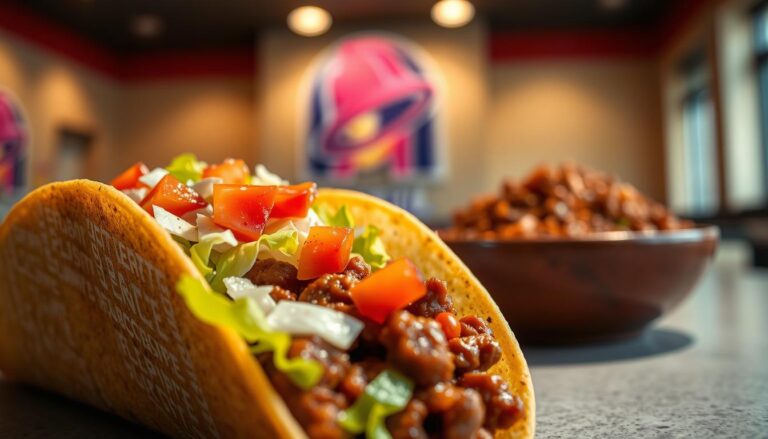
The fast-food model centers on seasoned ground beef, shredded cheese, and sauces that speed assembly. It trades slow processes for consistency over time.
Traditional cuisine relies on techniques such as nixtamalization and slow-cooked meats. Those methods take more time and skill and create different textures and depth of flavor.
| Feature | Fast-serve model | Traditional cuisine |
|---|---|---|
| Primary goal | Speed and consistency | Depth and regional technique |
| Typical protein | Seasoned ground beef; engineered beef blends | Slow-roasted barbacoa, carnitas, al pastor |
| Tortilla style | Engineered shells for stability | Soft masa tortillas from nixtamalized corn |
Saying this aloud isn’t gatekeeping. It helps you order with clear expectations. You can enjoy a drive-thru meal and also seek out a taquería when you want real craft.
From Glen Bell to global bellwether: how a California stand reshaped “tacos”
A single California stand in 1962 set off a chain of changes that shaped how many Americans think about tacos.
Downey, 1962: the first stand and its 19-cent menu
Glen Bell opened a small Downey counter in 1962. He sold 19-cent tacos, burritos, tostadas, chiliburgers, and frijoles. The low price and simple menu fit busy neighborhoods and fast service.
Reverse-engineering a hard-shell approach
Bell watched long lines at Mitla Cafe and learned a fast hard-shell method from head chef Gloria Hoyle. He adapted that shell for speed and consistency.
That crisp, portable shell made assembly predictable. It became the backbone for scaling a menu that worked at dozens of sites.
PepsiCo to Yum! Brands: the corporate arc
In 1978 the parent PepsiCo bought the chain and funded rapid growth. Later, the concept moved under Yum! Brands after a corporate spin-off.
The original Downey building now sits at corporate headquarters in Irvine. The brand shifted from mission-style walk-up stands to drive-thru restaurants and new formats. A shipping-container restaurant later moved to a South Gate lot, showing how flexible the model became.
- Small stand to national restaurants.
- Hard shell as a scalable technique.
- Corporate backing that spread the idea widely.
What Taco Bell says it serves: Mexican-inspired, not Mexican
Brand language frames the meal before you even open the bag.
Language that matters: “Mexican-inspired foods” in brand materials
The company calls its menu “Mexican-inspired foods.” That label appears in marketing and on corporate pages. It lists tacos, burritos, quesadillas, nachos, specialties, and value items.
Why wording shapes consumer expectations and cultural claims
Words tell people what to expect. Saying “inspired” signals adaptation for speed, cost, and consistency.
At scale, franchise restaurants use standardized ingredients and prep. More than 94% of locations are franchise-operated as of 2023.
- The brand’s phrasing helps set accurate expectations.
- “Inspired” protects the meaning of mexican food while allowing a different way of doing things.
- Clear language guides menu evolution, recipes, and team training day to day.
| Phrase | What it signals | Operational effect |
|---|---|---|
| “Mexican-inspired foods” | Adaptation and influence | Standardized prep, consistent service |
| “Tacos, burritos, quesadillas” | Familiar items listed | Fast assembly, cost control |
| Franchise model | Wide reach to people | Uniform supply chains across restaurants |
The soft corn tortilla versus the hard shell: a culinary fork in the road
A tortilla choice marks a practical and cultural split in how tacos reach your plate. One route follows a long craft. The other follows engineered speed.
Nixtamalization and masa as the foundation
Authentic tacos often start with nixtamalized corn. Kernels soak in an alkaline solution. That step unlocks aroma, nutrition, and workability.
Ground into masa, the dough is hand-pressed or cooked on a comal. The result is warm, pliable, and central to the dish. In many kitchens this is a daily ritual. Ingredients are treated as part of the recipe, not just packaging.
The engineered hard shell for speed and scale
The hard shell was designed for stability on an assembly line. It can sit on the line, handle fillings, and keep a predictable crunch. Taco Bell adopted this to speed service and keep texture consistent across locations.
- A soft corn tortilla brings aroma, pliancy, and a tender bite.
- An engineered shell gives crunch, shelf life, and quick assembly.
- Knowing the difference helps you choose where to eat tonight.
| Characteristic | Soft masa tortilla | Engineered hard shell |
|---|---|---|
| Primary process | Nixtamalization, grinding, hand-press | Formed, fried or baked for rigidity |
| Texture | Warm, pliable, tender | Crisp, stable, long-lasting |
| Flavor role | Tastes of corn; integral ingredient | Provides crunch; less flavor contribution |
| Operational fit | Taquerías, made-to-order kitchens | Quick-serve lines and high-volume outlets |
Meat, sauces, and toppings: flavor philosophy on two different streets
Two kitchens chase the same goal: satisfy a craving, but they take different routes to get there.
Slow-cooked tradition vs. seasoned assembly
Traditional tacos use whole cuts cooked low and slow. You find barbacoa, carnitas, and al pastor that pull apart and layer flavor over time.
By contrast, taco bell relies on seasoned ground beef for fast service. The mix is consistent, easy to portion, and built for high volume.
Fresh salsas and herbs vs. lettuce, cheese, and signature sauces
Authentic toppings lean on onion, cilantro, and bright salsas to cut the richness of the meat.
The drive-thru path adds shredded lettuce, cheese, and proprietary sauces to boost texture and mouthfeel.
- Slow meats offer depth and tender texture.
- Seasoned filling gives predictable taste and shelf stability.
- Toppings decide whether a bite is bright and simple or rich and saucy.
| Feature | Traditional | Drive-thru model |
|---|---|---|
| Primary protein | Barbacoa, carnitas, al pastor | Seasoned ground beef |
| Topping style | Onion, cilantro, salsas | Lettuce, shredded cheese, signature sauces |
| Flavor goal | Layered, bright balance | Consistent, rich profile |
If you want to read how authentic preparations differ from the Americanized versions, see a concise comparison at authentic vs. American-style tacos.
Tex-Mex, Mexican-American, and fast food: drawing the cultural lines
Regional dishes adapt when they travel, and those shifts tell a clear story.
Think of Tex‑Mex and Mexican‑American cooking as bridges. They connect home kitchens and street vendors to broader audiences. They do not replace regional traditions.
Taco Bell sits squarely in the fast food lane of that bridge. The menu is built for speed, predictability, and scale. That makes it different from hand‑made street tacos you buy from a family cart.
Honoring street traditions means using accurate words. Clear labels keep respect at the center of the plate. You can enjoy both kinds of meals and still name them for what they are.
- Tex‑Mex and Mexican‑American dishes adapt ingredients and techniques.
- Fast food focuses on repeatability and cost control.
- Street traditions come from places and families; they carry lineage.
| Aspect | Bridge style | Fast‑serve chain |
|---|---|---|
| Origin | Regional recipes adapted by communities | Standardized recipes for many locations |
| Preparation | Handmade, small batches | Prepped for speed and consistency |
| Experience | Personal, place-based | Convenient, predictable |
| Why it matters | Preserves lineage and flavor nuance | Makes dishes widely accessible |
The taco you grab at a chain and the one from a small stand can share a name while telling different stories. Give each story space. Both can thrive in the same world.
Numbers speak: reach, franchise model, and the fast-food reality
Scale explains why many menu choices feel familiar to you.
Thousands of restaurants and billions served each year
As of 2023, taco bell operates 8,212 restaurants across the united states. The chain serves over two billion customers each year. Those numbers show how often people pick a quick meal over other options.
Franchise dominance and the value-menu play
More than 94% of locations are franchise-owned. Local operators follow tight systems for supply, prep, and training. That keeps items consistent from one site to the next.
- Scale shapes what you taste: standardized sourcing and prep are necessary for thousands of restaurants.
- Value menus attract families and shape portioning, ingredients, and speed.
- Fast food realities—labor, equipment, and supply chains—drive choices from seasoned beef to packaging.
| Metric | 2023 data | Operational effect | Why it matters |
|---|---|---|---|
| Restaurants | 8,212 locations | Uniform recipes and training | Predictable meals nationwide |
| Customers per year | Over 2 billion people | High-volume supply chains | Menu items built for speed |
| Franchise ownership | >94% franchised | Local operators, central standards | Consistency across regions |
| Value strategy | Ongoing value menus | Smaller portions, cost control | Affordable choices for families |
Numbers do not judge quality. They explain why a system favors speed and sameness. When you know the model, you can match expectations to experience and pick a slower, craft meal when you want deeper tradition.
Marketing that made “taco” mainstream in America
A steady stream of stunts and hits made the brand part of everyday American moments. Those campaigns turned products into events you remember and talk about.
From Gidget the Chihuahua to World Series freebies
The Gidget ads (1997–2000) put a tiny mascot in the public eye. Catchphrases stuck. Fans learned the name through humor and repetition.
The “Steal a Base, Steal a Taco” tie-in began in 2007. On game day, a stolen base meant free tacos the next day. The stunt drove foot traffic and press across the country.
Stunts, exclusives, and product permanence
The Mir re-entry stunt in 2001 grabbed headlines and turned curiosity into visits. Mountain Dew Baja Blast, exclusive since 2004, became a cult drink tied to the menu.
The Crunchwrap Supreme launched as a limited item and became permanent in 2006. These shifts taught people to expect novelty and then steady favorites.
Product innovation and urban stretch
Doritos Locos Tacos (2012) married a snack brand to quick service. It became a pop culture moment and sold in huge numbers.
The Cantina concept opened on the Las Vegas Strip in 2016. It added alcohol, late-night energy, and city locations while keeping familiar sauces and formats.
- You likely met the brand through memorable ads and free-taco promotions.
- Exclusive items and clever stunts made menu drops feel like events.
- Restaurants in high-traffic areas amplified campaigns and created routine visits.
| Campaign | Year | Impact |
|---|---|---|
| Gidget Chihuahua | 1997–2000 | Wider brand recall through mascot and catchphrases |
| Baja Blast | 2004 | Drink exclusivity built cult followings |
| Doritos Locos Tacos | 2012 | Snack crossover that drove huge sales |
Crossing borders: Taco Bell in Mexico and the “Tacostada” moment
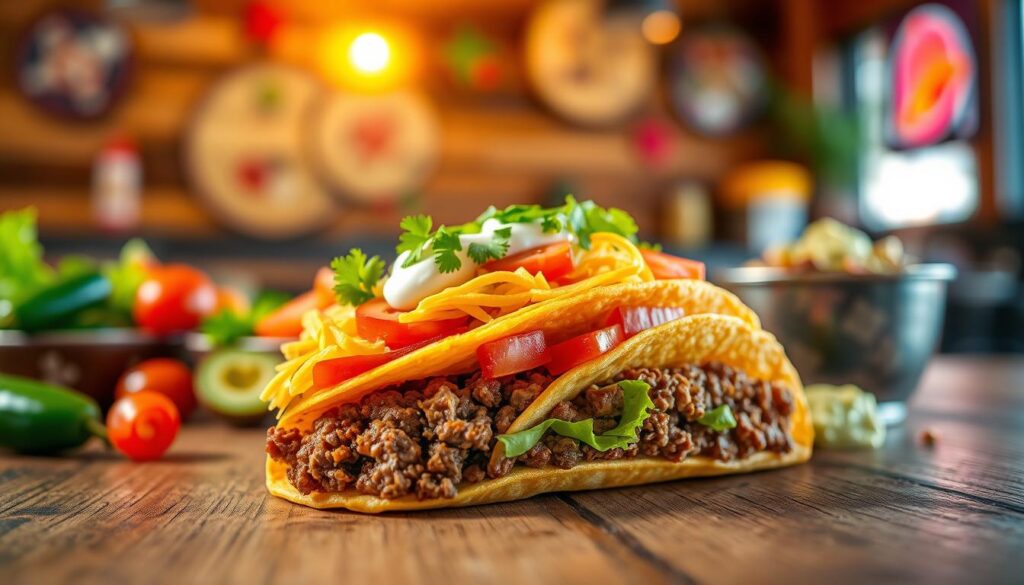
The Monterrey launch offered a lesson in how names matter when cuisine crosses borders. In 2007 the chain re-entered Mexico after a 15-year absence. It presented itself with a simple line: “Es otra cosa” — it’s something else.
“Es otra cosa”: presenting the food as something else in Mexico
The brand avoided calling the menu local. Instead it introduced the Tacostada, a crunchy shell version set apart from soft tortilla street tacos many in Monterrey eat daily.
Reception in Monterrey: pride, curiosity, and guilty pleasure
Local reactions mixed. Some defended street traditions. Others tried the new menu out of curiosity and liked it. Commentators noted a gentle cultural pushback, tied to pride in regional tacos.
- The parent chose clear wording rather than claiming authenticity.
- The menu leaned on seasoned ground beef and fast sauces, much like U.S. outlets.
- The moment showed how a single word can set expectations in a new market.
| Aspect | Local street tacos | Tacostada at launch |
|---|---|---|
| Tortilla style | Soft masa tortilla | Engineered crunchy shell |
| Protein approach | Slow-cooked beef and cuts | Seasoned ground beef |
| Brand language | Traditional naming | “Es otra cosa” — clear distinction |
Authenticity isn’t a flavor—it’s a process and a lineage
Authenticity lives in the kitchen long before it reaches your plate. When people talk about authentic mexican they mean methods handed down across generations.
Processes like nixtamalization for tortillas and slow braises for barbacoa and carnitas build texture and real flavor. Those steps create depth shortcuts can’t copy.
Ingredients matter. Whole chiles, fresh herbs, and careful seasoning change the outcome. That care shows in each bite.
- Authenticity describes how cooks work, not only how a dish tastes.
- Slow-cooked beef reads differently than a speedy, seasoned filling.
- If you want process, seek kitchens that honor it every day; if you want predictability, choose quick-serve chains like taco bell.
| Aspect | Traditional | Fast-serve |
|---|---|---|
| Core process | Nixtamalization, slow braise | Engineered prep, quick assembly |
| Ingredients | Whole chiles, fresh aromatics | Standardized mixes for shelf life |
| Outcome | Layered, place-based cuisine | Consistent, convenient food |
Both styles fit at the table. Call them by their names to protect lineage and honor hard-won skills. That keeps choices honest when you pick taco bell or a craft kitchen.
Speed, consistency, and cost: why fast food diverges from tradition
When minutes count, menus change to meet the clock.
You see that in drive-thru windows. Around 1980, taco bell expanded drive-thru service and moved to standardized formats. Those layouts and co-branded express models let teams serve a steady stream of customers every year.
Supply chains, standardization, and the drive-thru logic
Drive-thru logic shapes prep lists and packaging. Time is the key constraint. Orders must survive a short wait and a moving line.
Standardization helps. Restaurants train to hit the same target across shifts and seasons. That keeps taste predictable for you and manageable for crews.
- Supply chains favor items that travel well and hold shape.
- Rigid build sequences replace simmering pots and long braises.
- Brands refine layout and equipment to shave seconds over the year.
| Driver | Practical effect | Customer result |
|---|---|---|
| Drive-thru timing | Fixed holding times; fast assembly | Dependable service and temperature |
| Standardization | Uniform recipes and training | Same taste across restaurants |
| Supply chains | Durable ingredients and packaging | Items that travel well along the line |
Understanding this system helps you appreciate what a chain like taco bell can do and where it must cut corners. If you want deeper technique, try local kitchens. If you want quick, dependable meals on a long drive, the design works as intended.
For a quick detour on other food court choices, see the costco food court menu.
The Glen Bell legacy: innovation or appropriation—or both?
Glen Bell’s story sits at the crossroads of craft and commerce. He watched long lines at Mitla Cafe and saw a simple, effective method that worked on the street.
He adapted that hard-shell approach for speed. The result was a new way to serve meals at scale. That choice launched a national business and later led to a sale to PepsiCo and a place under Yum! Brands.
Learning from Mitla Cafe and the ethics of adaptation
The lesson is twofold. Innovation often begins when someone borrows a smart idea. That can be clever and useful.
It also raises questions. Who gets credit? Who benefits when a neighborhood practice becomes a chain model?
- Glen Bell watched Mitla Cafe and adapted a street technique.
- The hard-shell pathway changed how millions eat.
- Respect means naming sources, sharing platforms, and keeping origins visible.
| Aspect | Original | Scaled result |
|---|---|---|
| Source | Mitla Cafe, street counter | National quick-serve chain |
| Process | Handmade method in small batches | Engineered for assembly lines |
| Ethics | Community recognition | Credit, context, and benefit-sharing |
You can admire the execution and still ask for clear credit. When restaurants name their sources and support the cooks and communities behind a method, you get both convenience and cultural respect.
How people actually eat: nostalgia, late nights, and everyday choices
Late nights and long drives often end with a familiar bag at the passenger seat. For many in the United States, taco bell’s late-night hours and value deals make it a natural stop.
On a rough day, you want fast, familiar food that feeds a crowd. Time and budget matter. Convenience often wins when schedules are tight.
- People build memories around road trips, study nights, and team wins with a shared order.
- That nostalgia is real. It’s fine to lean into it for comfort.
- You can keep rituals and still choose slower meals when you have time.
| When | Why | Result |
|---|---|---|
| Late night | Open hours and convenience | Quick, familiar meals |
| Long day | Limited time and budget | Comfort over discovery |
| Road trips | Wide availability | Easy sharing for families |
Small swaps—trying a local spot on a free weekend—add variety without breaking routine. Respect your patterns. Enjoy each meal for what it is.
Where to draw the line: enjoying Taco Bell without blurring cuisines
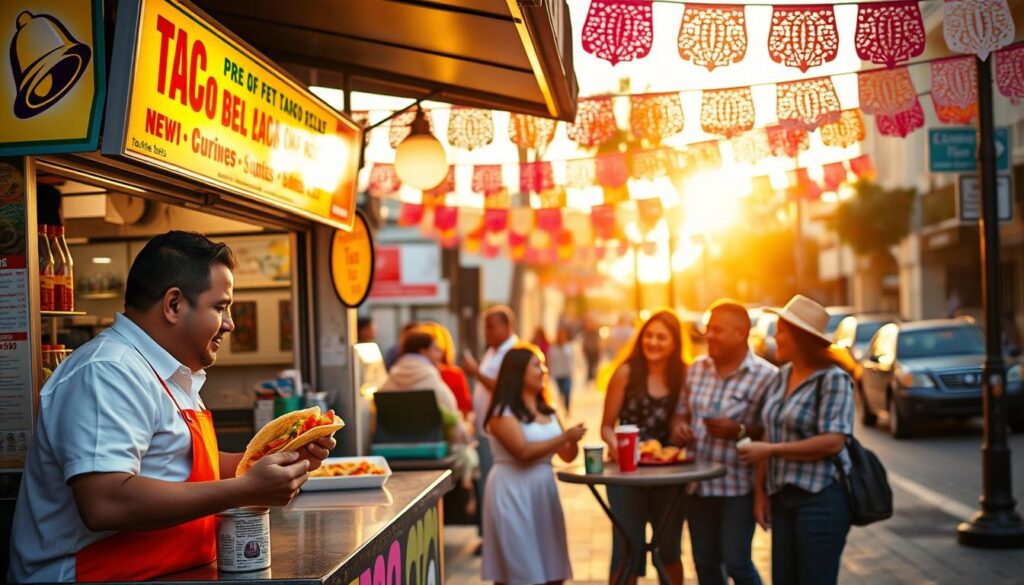
A small habit—calling things by their true names—keeps history visible when you grab a quick meal. You can like chain flavors and still respect long-standing kitchens.
Use plain words when you talk about choices. Call Taco Bell Mexican-inspired fast food. Save mexican food for places that make tortillas from masa and slow-cook meats the traditional way.
Use the right words: Taco Bell as Mexican-inspired fast food
When you say the chain’s name, you set expectations. The label “Mexican-inspired” signals adaptation for speed and scale. That helps friends know what to expect from a late-night drive-thru line.
Seek out authentic restaurants for the real techniques and flavors
If you want nixtamalized tortillas, pulled barbacoa, or fresh salsas, visit restaurants that show those methods on the plate. Ask about process. Chefs and small owners usually welcome questions.
- You can enjoy Taco Bell and keep the language clear.
- Match the meal to time and budget: drive-thru for speed; restaurants for craft.
- Use simple words with family so you all know what kind of tacos you plan to eat.
| Decision point | Quick-serve choice | Authentic restaurants |
|---|---|---|
| Label | Mexican-inspired fast food | Traditional mexican food |
| Technique | Standardized prep, engineered shells | Nixtamalization, slow-cooked meats |
| Best time to choose | Busy nights, road trips, value runs | Weekends, special meals, learning visits |
| How to support | Enjoy responsibly; use clear words | Ask about process; tip and recommend |
A final word on tacos, taste, and cultural respect
A clear label makes deciding where to eat easier and kinder to history.
Take this with you: taco bell offers comfort and speed; mexican food offers process-driven depth. Name each for what it is so expectations and credit stay aligned.
Choose the taco you want today, and save another style for a different moment. Let flavor and time guide you. When you want richness from technique, plan for it. When you want quick satisfaction, the drive-thru will meet you where you are.
Respect for cuisine doesn’t require losing your favorite rituals. The simplest fix is the clearest words: Mexican-inspired fast food versus traditional cooking. That clarity keeps the conversation friendly and useful at the table. Enjoy your next meal with confidence and a little more context.