Is Taco Bell Gluten Free
You want a clear, honest answer. This short guide gives the facts so you can decide if this fast food restaurant fits your needs today.
Taco Bell posts an allergen and ingredient guide online. The brand does not certify a gluten-free menu. That means items made without gluten ingredients are starting points, not guarantees.
Shared lines, prep boards, and fryers can cause cross-contact. During busy hours, risk rises. If you follow a strict diet, focus on simpler bowls and ask specific questions at the counter.
This guide answers common questions, shows which menu picks may work, and lists smart customizations. You’ll also get practical tips for talking to staff and a quick look at 2025 menu changes that might matter.
By the end, you’ll know what to ask, what to watch for, and when it’s wiser to pick another spot. Use this as a quick checklist before you order.
What people mean by “Is Taco Bell Gluten Free” right now
A simple question hides two different concerns: ingredient lists and cross-contact in a busy kitchen.
When you ask about taco bell, you usually want a quick list of safe picks and clear handling rules. Many diners with celiac disease or other sensitivity check both the recipe and how staff prep the food.
The brand does not offer a certified gluten-free menu, so items without gluten ingredients start as possibilities, not guarantees. Staples people talk about include black beans, rice, and crunchy corn tacos. Those items lack gluten in their recipes but face exposure risk from shared surfaces and fryers.
| Item | Has Gluten Ingredients? | Cross-contact Risk |
|---|---|---|
| Crunchy corn tacos | No | Medium (shell storage) |
| Black beans | No | Low to Medium (prep area) |
| Seasoned meats | Varies | High (shared utensils) |
You’ll see two main questions: which menu items list no gluten and whether staff can keep your order separate. This short guide answers both and gives plain phrases to use at the counter. For broader menu comparisons, learn more about menu options here.
Taco Bell’s allergen policy and shared-kitchen reality
The brand’s ingredient and allergen paperwork is a useful tool, but it has real limits. The guides flag wheat in sauces, shells, and some proteins. They also note which items list no gluten ingredients.
What the official guides promise — and what they don’t
The menu and ingredient lists help you spot wheat and suspect sauces. They show where gluten may appear in recipes. But the company does not certify items as gluten-free for people with celiac disease.
That means “no gluten ingredients” is only a starting point. It does not guarantee how staff handle each order during busy service.
Cross-contact risks in a fast-food line
Shared kitchen spaces raise cross-contamination risk. Prep boards, scoops, and shared utensils can move crumbs from flour tortillas to a bowl.
Fryers used for battered items can contaminate corn or potato items. A clean counter can collect dust and crumbs fast during peak cooking and assembly.
- Ask for fresh gloves and separate utensils when you order.
- Request assembly on a clean prep area away from flour storage.
- Plan what you’ll ask the team to do before you reach the counter.
| What the guide shows | What it can’t promise | Practical step |
|---|---|---|
| Which ingredients contain wheat | How food is handled in each restaurant | Ask about separate tools and fresh gloves |
| Items with “no gluten ingredients” | Zero cross-contact during prep | Pick simple builds and avoid shared fry items |
| Sauce and dressing ingredient lists | Storage and assembly practices | Swap dressings that list wheat |
Gluten-free-style picks you can consider today (with smart customizations)
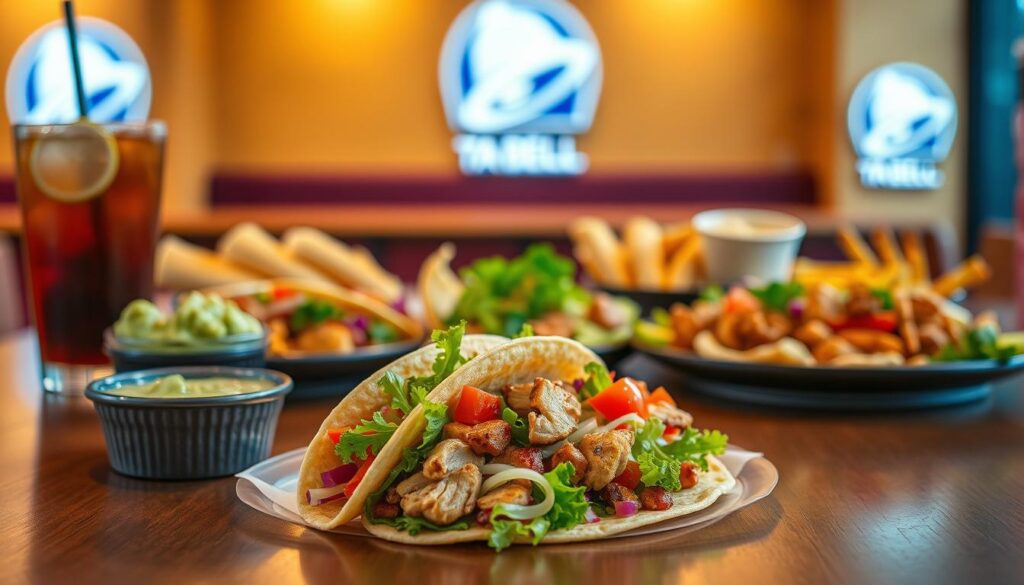
Start with low-touch items and ask one clear question at the counter. Small swaps and a short request for fresh gloves go a long way. Below are sensible builds and what to watch for when you order.
Power Menu Bowls — simple swap, big impact
Choose a power menu bowl and remove Avocado Ranch. That dressing lists gluten in its recipe.
Ask whether chicken or steak can be handled with fresh gloves and a clean scoop. A quick check reduces stray crumbs.
Crunchy corn tacos — corn shells, storage risk
Corn shells do not list wheat ingredients. Still, they may be stored near flour tortillas.
If you want beef, note the seasoned beef mix includes oats. Pick chicken or steak to avoid that ingredient.
Black Beans and Rice — fewer moving parts
Black beans and rice or beans alone are simple and filling. They list no gluten ingredients in the guides.
Verify prep is on a clean surface to lower cross-contact risk.
Sauces to keep or skip
Packet sauces (Hot, Mild, Fire, Diablo) list no gluten ingredients and are safer choices. Skip Avocado Ranch and other creamy dressings that contain gluten.
| Pick | Why it helps | Action to take |
|---|---|---|
| Power Menu Bowl | Customizable base with rice, beans, protein | Remove Avocado Ranch; request fresh gloves for protein |
| Crunchy Corn Tacos | Corn shell has no gluten ingredients | Ask for separate handling; choose chicken or steak over seasoned beef |
| Black Beans & Rice | Few ingredients, low handling | Order plain; ask for clean prep surface |
| Packet Sauces | No gluten ingredients listed | Use Hot, Mild, Fire, or Diablo; avoid creamy dressings |
Items to skip due to gluten or high cross-contamination risk
Some menu choices carry higher exposure risk and are best skipped if you avoid wheat. In busy fast food kitchens, shared fryers and seasoned bins raise the chance of cross-contact.
Chips, Nacho Fries, and hash browns
Skip tortilla chips and Nacho Fries. They often use the same oil or seasoning as breaded foods. Hash Browns usually share fryers too, so the cooking method increases gluten exposure.
Flavored shells and dessert items
Avoid Nacho Cheese Doritos Locos Tacos and other Doritos Locos flavored shells. These cheese doritos style shells contain ingredients or flavors that are not suitable for people avoiding gluten.
Flour tortillas, chalupas, and sweets
Flour tortillas, chalupas, and desserts like Cinnabon Delights contain wheat and should be off your menu. Sauces served with these foods can be fine alone, but handling raises overall risk.
- Choose a corn crunchy taco instead of chips or fries.
- Ask whether sides go into shared oil before you order.
- Pre-plan non-fryer sides for family meals to reduce exposure.
| Item | Why skip | Gluten ingredient present | Cross-contact risk |
|---|---|---|---|
| Nacho Fries | Seasoning and shared oil | Yes (seasoning) | High |
| Tortilla chips | Cooked in shared fryers | No (shell) | High |
| Nacho Cheese Doritos Locos | Flavored shell with additives | Yes | High |
| Flour tortillas & desserts | Contain wheat | Yes (wheat) | High |
How to order at Taco Bell with gluten in mind
Place your order with a short plan so staff know exactly how to handle it.
Start by asking staff to use fresh gloves and a clean prep area. A brief, polite request works best in a busy shared kitchen. This lowers the risk cross-contamination from flour or crumbs.
Skip Avocado Ranch and other creamy dressings that list wheat. Ask to remove those sauces and stick to packet sauces that list no wheat-based ingredients. Keep your build simple. Fewer scoops and toppings mean fewer chances for stray crumbs.
Pick proteins and handling
Choose chicken or steak and ask that the scoop and pan be cleaned or swapped. Request separate packaging so your tacos or bowl do not touch flour tortillas in the bag. Confirm nothing in your order needs the fryer; shared oil raises cross-contact risk.
- Ask for fresh gloves and a clean prep surface.
- Tell staff which sauces to skip and which to keep.
- Choose chicken or steak; request separate scoops.
- Ask for separate packaging to reduce contact after service.
- If you have celiac disease, mention sensitivity so staff focus on preparation steps.
| Action | Why it helps | What to say |
|---|---|---|
| Fresh gloves | Reduces transfer of crumbs | “Please change gloves before my order.” |
| Clean prep area | Lowers surface cross-contact | “Can you assemble on a clean counter?” |
| Skip Avocado Ranch | Removes a sauce with wheat | “No Avocado Ranch, please. Packet sauce only.” |
| Separate packaging | Keeps items from touching flour tortillas | “Please bag this separately from tortilla items.” |
Is Taco Bell Gluten Free for people with celiac disease?
For someone with celiac disease, a restaurant’s routines matter as much as its recipes. Taco Bell does not run dedicated gluten-free kitchens and does not certify a gluten-free menu. That means even items with no wheat on the ingredient list can face gluten exposure during prep.
Why dedicated gluten-free status matters for celiac safety
Dedicated lines control surfaces, tools, and staff training. That reduces crumbs and stray flakes that cause harm to you. Without that control, the risk of gluten exposure rises.
When those with non-celiac sensitivity might tolerate select items
If you have non-celiac sensitivity, simpler builds and clear handling requests can lower risk. Ask for fresh gloves, separate scoops, and packet sauces that list no wheat. Off-peak visits give staff more time to follow your requests.
- Choose items with few ingredients.
- Avoid fried or shared-oil items.
- Consider another restaurant for strict safety needs.
| Concern | What to ask | Why it helps |
|---|---|---|
| Cross-contact | “Please use fresh gloves.” | Reduces transfer from surfaces |
| Ingredient risk | Pick items with no wheat listed | Fewer recipe risks |
| Busy line | Order off-peak | More careful prep time |
Ingredient flags and prep pitfalls to understand before you order
A quick scan of ingredient notes and staff routines can save you a lot of worry at the counter. Know which recipe flags matter and how prep choices raise cross-contact risk.
Seasoned beef note: oat-containing formulation considerations
Seasoned beef includes oats in its mix. Some people who avoid wheat steer clear of oats too. If oats are a concern, choose chicken or steak instead.
Avocado Ranch contains gluten—what to use instead
Avocado Ranch lists wheat in its recipe. Swap it for packet sauces like Hot, Mild, Fire, or Diablo. Those packet options list no gluten ingredients and cut handling steps.
Shared storage for shells and tortillas increases risk
Shells and flour tortillas may be stored close together. That raises crumbs and transfer during assembly. Ask that your tacos or bowls be built away from flour items.
- Request fresh gloves and a clean scoop for beans, rice, or chicken.
- Keep a short list of trusted menu items to order quickly.
- Ask where shells sit and which scoops are shared that day.
| Flag | Why it matters | Action |
|---|---|---|
| Oats in beef | Some avoid oats as a wheat proxy | Pick chicken or steak |
| Avocado Ranch | Contains wheat in dressing | Use packet sauces instead |
| Shared shell storage | Crumbs transfer to orders | Ask for separate assembly |
How Taco Bell compares to other fast food chains for gluten-aware diners
Different food chains adopt different assembly setups, and that affects what lands on your plate.
Some food chains use Chipotle-style lines with separate stations. That model reduces hand-offs and can make it easier to avoid cross-contact. Other fast food chains keep shared prep areas and common tools. Shared workspaces raise the chance of stray crumbs during busy shifts.
Chipotle-style assembly lines vs shared workspaces
Assembly-line setups let you see each step. Staff often use dedicated scoops and clear stations. That helps diners who want a simple bowl or a fixed order with fewer risks.
Shared workspaces, like many quick-serve counters, mix shells, proteins, and sauces. Ask staff about gloves, scoops, and separate packaging before you order.
Scan allergen pages before you go
Make a habit of checking a chain’s allergen or ingredient page at home. It’s a quick step that saves time and stress at the register.
For a broader look at safe picks across chains, consult a trusted roundup on gluten-free fast food.
- Look for chains with dedicated fryers or marked menu items.
- Choose simple builds with fewer hand-offs.
- Bring a short list of go-to orders for each restaurant to speed the process.
| Feature | Chipotle-style chains | Shared-prep chains |
|---|---|---|
| Assembly | Segmented stations | Common counters and tools |
| Cross-contact risk | Lower with clear steps | Higher during peak service |
| Best pick | Bowls and salads | Simple builds with fresh gloves |
What’s new on the menu right now and why it matters
Menu updates can change what’s safest to order on a busy day. New items may alter where shells, sauces, or fry oil sit during service. That matters for anyone avoiding gluten or managing celiac disease.
2025 additions and the practical risk
In January 2025, the chain added Steak Garlic Nacho Fries and Baja Dream Freezes. The fries use seasoned coating and are cooked in shared fryers. That seasoning and shared oil increase cross-contact risk. Treat nacho cheese + fries promos as high-risk unless staff say otherwise.
- Check the posted allergen information before you order menu items.
- Baja Dream Freezes are beverages; confirm ingredient information for limited flavors.
- If a promo changes shell or sauce storage, ask staff where items are kept.
| New item | Cooking / handling risk | What to do |
|---|---|---|
| Steak Garlic Nacho Fries | Seasoned fries; shared fryer and nacho cheese handling | Avoid if you avoid wheat; choose a bowl or corn-shell tacos instead |
| Baja Dream Freeze | Beverage; low cooking risk but check flavor ingredients | Verify current ingredient information before ordering |
| Nacho cheese promos | Increases fryer and counter traffic near sauces | Assume higher cross-contact risk unless staff confirm separate handling |
New doesn’t have to mean unsafe. Use fresh allergen info, ask a quick question at the counter, and stick to simple foods you trust when in doubt.
Should you eat at Taco Bell on a gluten-free diet?
Choosing to eat here depends on how much risk you accept. The chain warns that shared kitchens raise risk cross-contamination. That matters most for people with celiac disease.
Good picks include a Power Menu Bowl without Avocado Ranch, crunchy corn tacos handled on a clean surface, and black beans with rice. Ask staff for fresh gloves, separate scoops, and separate packaging before you place an order.
Avoid flavored shells, Doritos Locos shells, and any fried items from shared oil. Use this guide and a short list of trusted menu items to order fast. If the line looks rushed, it’s fine to choose another fast food stop so you can eat with confidence.